-cropped.svg)

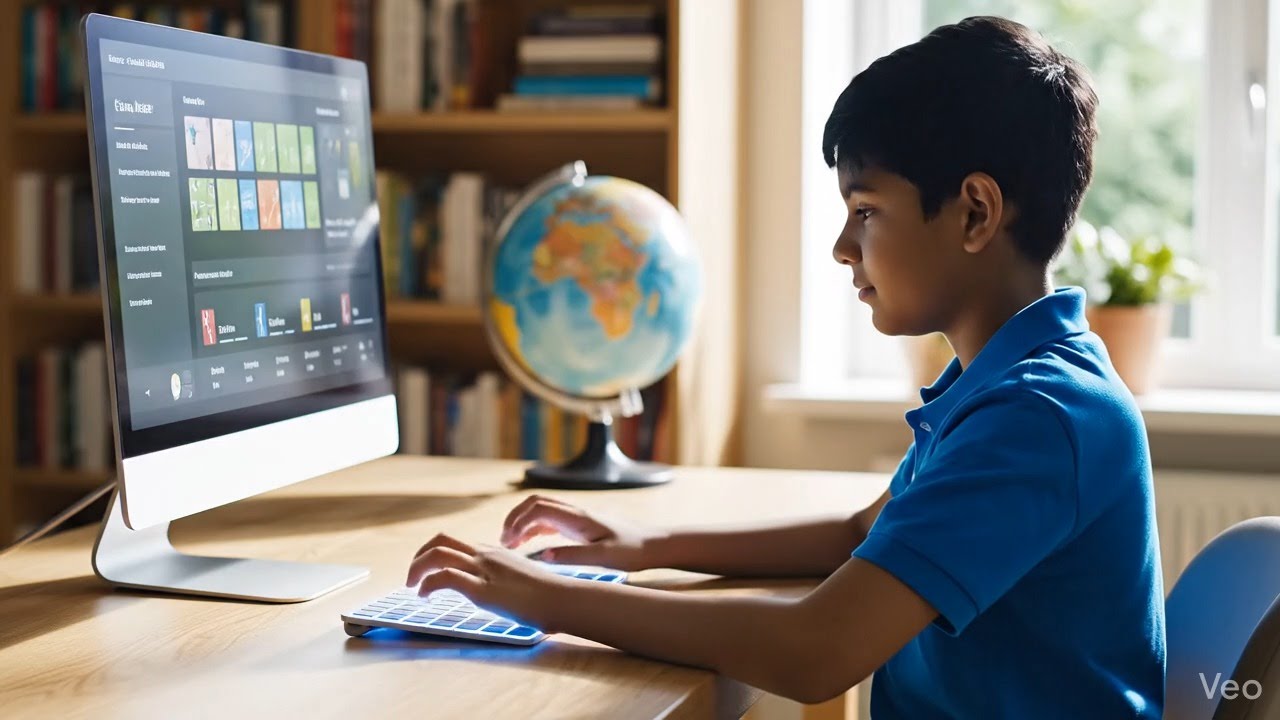
Ask a child what they did on their device today and you'll usually get one of two kinds of answers. The first is a list of things they watched, played, or scrolled through. The second — rarer, but unmistakable — is a description of something they made.
The difference between those two answers is bigger than it sounds.
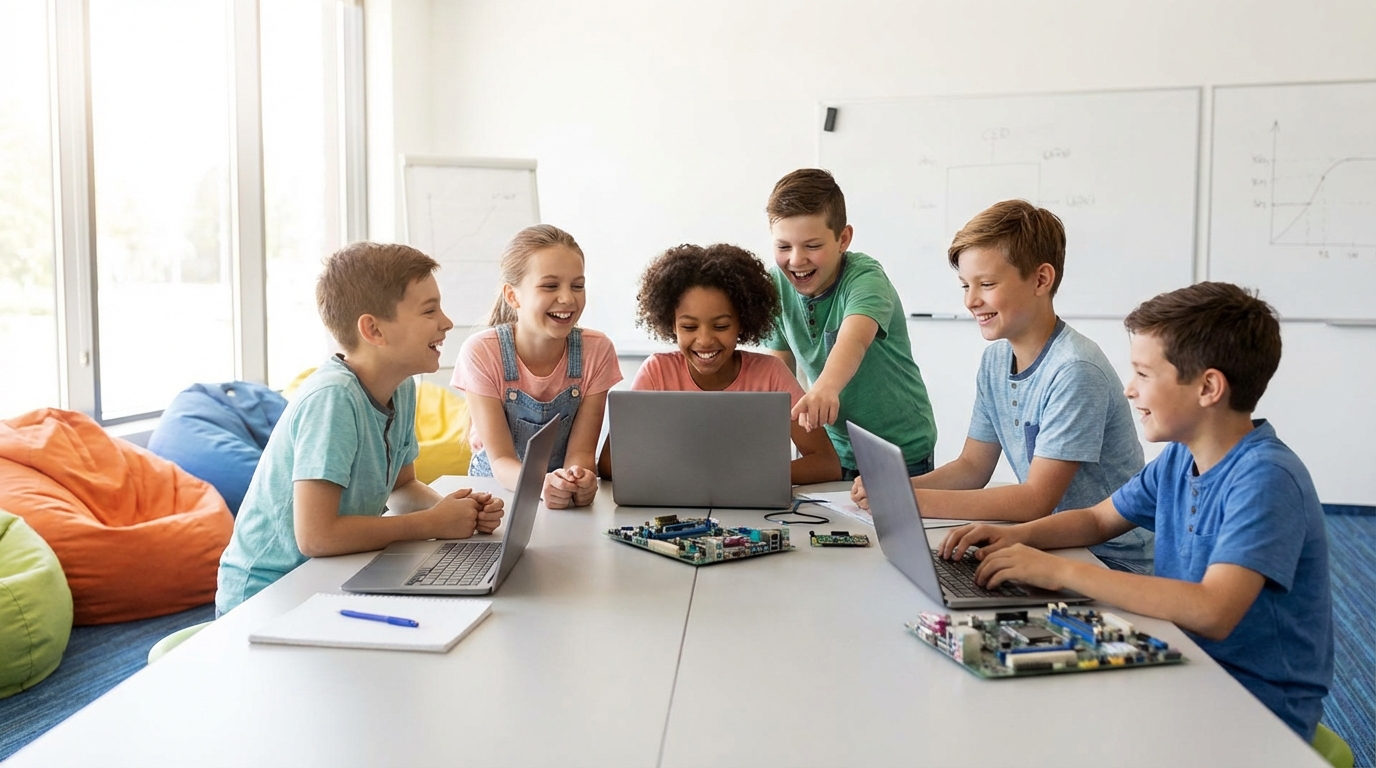
Consuming technology is passive. It asks nothing of the child except their attention. Creating with technology is active — it asks them to think, decide, problem-solve, and follow through. It turns a screen from a window into a workshop.
At BrightSide, we've built our entire program around that shift. Not because consuming is wrong, but because creating is so much more powerful. A child who finishes a project they built themselves carries something with them that no amount of passive watching can provide — the knowledge that they can make something from nothing.
That knowledge sticks. And it grows.
What Happens When Kids Build
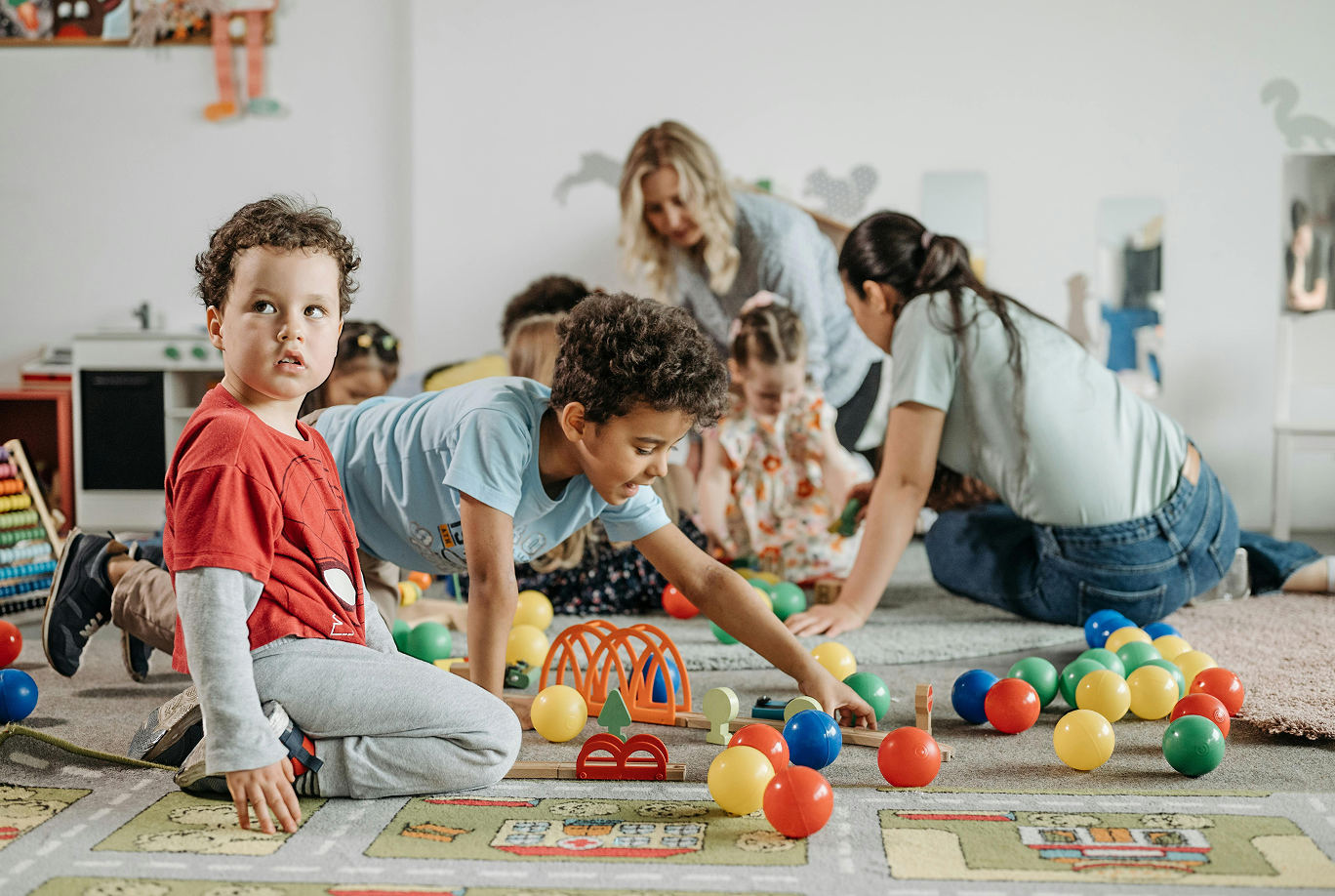
When a child creates something — a design, a project, a solution to a problem they chose themselves — something shifts in how they see themselves.
They stop being consumers of the world and start being contributors to it. They ask better questions. They pay attention differently. They start to see possibilities where they used to see finished products.
That shift doesn't just show up at camp. It shows up at school, at home, and in every creative challenge they'll face as they grow.
Starting Small, Thinking Big
You don't need a complex project to start building. A simple design, a short piece of writing, a basic piece of code — these are enough to spark the habit.
At BrightSide, we start where each child is and let the work grow from there. Some kids arrive nervous and leave with a portfolio they're proud of. Others arrive confident and leave with a challenge they're still thinking about.
Either way, they leave as creators. And that changes everything.